One of the biggest advantages of forming a company is that the company becomes a separate legal person.
In simple words:
If your company does something stupid, the law usually blames the company — not you personally.
Sounds amazing, right?
It’s almost like wearing an invisible legal shield.
You start a company.
The company signs contracts.
The company borrows money.
The company gets sued.
And meanwhile the shareholders sit in the background pretending:
“We are merely investors.”
But then came certain people who looked at this beautiful legal principle and thought:
“What if we use this company structure for fraud, tax evasion, illegal activities, or general chaos?”
And Company Law responded:
“Congratulations. You have unlocked the doctrine of lifting the corporate veil.”
What is the Corporate Veil?
A company has a separate legal identity distinct from its members. This principle was firmly established in Salomon v. Salomon & Co. Ltd..
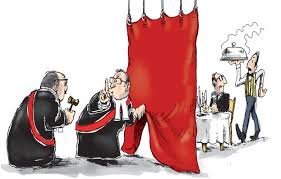
The “corporate veil” is the imaginary curtain separating:
- The company
from - The people controlling it
Normally, courts respect this separation.
Meaning:
If the company owes money, creditors cannot usually chase the shareholders personally.
The company stands on its own.
Like an adult.
A very rich adult with auditors.
But Sometimes the Court Gets Suspicious…
Suppose someone creates a company only to:
- Commit fraud
- Avoid taxes
- Escape legal obligations
- Hide illegal transactions
- Or manipulate the law
At that point, the court basically says:
“Alright, enough drama. We’re looking behind the curtain.”
This is called:
Lifting or Piercing the Corporate Veil
It means the court ignores the company’s separate personality and identifies the real people behind it.
Corporate law suddenly transforms from:
“Respectable business law”
to
“Crime investigation documentary.”
Why is the Doctrine Necessary?
Without this doctrine, dishonest people could misuse companies like legal invisibility cloaks.
Imagine this conversation:
Government:
“You owe taxes.”
Person:
“No, no, not me. My company.”
Government:
“But you own the company.”
Person:
“Yes, but legally we are different people.”
Government:
“…I hate corporate lawyers.”
To prevent misuse, courts developed the doctrine of lifting the corporate veil.
It ensures that law protects honest businesses — not corporate magicians performing legal disappearing acts.
Circumstances Where Courts Lift the Corporate Veil
Now comes the important part for CLAT PG.
Courts generally lift the veil in exceptional situations.
Let’s discuss the major ones.
1. Fraud or Improper Conduct
This is the most common ground.
If a company is formed to commit fraud or illegal acts, courts will ignore its separate personality.
Because the law respects genuine business activity — not “Scam Pvt. Ltd.”
For example:
Suppose someone creates five fake companies to launder money.
The court will not politely say:
“Well technically the companies are separate entities.”
No.
The court will lift the veil and identify the actual individuals responsible.
Because even Company Law has limits.
2. Tax Evasion
Governments become extremely emotional when taxes disappear.
If companies are used merely to avoid tax liability dishonestly, courts may lift the veil.
A classic example is:
In Re Sir Dinshaw Maneckjee Petit
In this case, the assessee created multiple companies solely to avoid taxes.
The court observed that these companies were merely sham entities created for tax evasion.
In legal language:
“Corporate structure abused.”
In simple language:
“Bro created companies just to confuse the tax department.”
The veil was lifted.
The tax authorities won.
And accountants everywhere became nervous.
3. Enemy Character During War
This sounds dramatic because it actually is.
During wartime, courts may examine who controls the company.
Even if a company is incorporated in one country, if it is controlled by enemy nationals, courts may treat it as an enemy company.
Example:
Daimler Co. Ltd. v. Continental Tyre and Rubber Co.
A company incorporated in England was controlled by German shareholders during World War I.
The court lifted the veil and looked at the real controllers.
Because apparently even corporations get dragged into geopolitics.
4. Avoidance of Legal Obligations
Sometimes companies are created simply to escape existing legal duties.
Courts absolutely dislike this.
For instance:
Suppose a person signs a non-compete agreement and then creates another company to secretly continue the same prohibited business.
The court may lift the veil and say:
“Sir, you cannot play hide and seek with the law.”
One important case is:
Gilford Motor Co. Ltd. v. Horne
The defendant formed a company merely to avoid contractual obligations.
The court restrained the company and lifted the veil.
Translation:
“Creative attempt. Rejected.”
5. Agency or Alter Ego Theory
Sometimes a company acts merely as an agent of its shareholders.
In such cases, the company is not truly independent.
The court may treat the acts of the company as acts of the controlling individuals themselves.
This usually happens where:
- One person completely dominates the company
- The company has no real independent existence
- It acts merely as a puppet
Corporate puppetry:
Illegal in law.
Common in movies.
6. Protection of Public Interest
Courts may also lift the veil where public welfare or justice demands it.
Because at the end of the day, legal principles exist to serve justice — not corporate manipulation.
This principle becomes important in:
- Environmental cases
- Labour welfare matters
- Economic offences
- National security concerns
Judicial vs Statutory Lifting of Veil
This is a favourite theory question.
Judicial Lifting
When courts themselves decide to ignore separate legal personality based on circumstances like fraud or tax evasion.
Statutory Lifting
When statutes expressly provide situations where liability falls on individuals behind the company.
Under the Companies Act, 2013, directors and officers may become personally liable in several situations involving:
- Fraud
- Misstatements in prospectus
- Misconduct
- Non-compliance
Because lawmakers eventually realized:
“Some people cannot be trusted with limited liability.”
Is Lifting the Veil Common?
No.
Courts are generally cautious.
Separate legal personality is still the fundamental rule.
Lifting the veil is the exception.
Why?
Because businesses need certainty and protection to function efficiently.
If courts ignored corporate personality every day, investors would panic.
Nobody wants to wake up and discover:
“Congratulations. Your startup losses are now personally yours.”
Why This Topic is Important for CLAT PG
This topic is a goldmine for CLAT PG because it combines:
- Theory
- Landmark cases
- Practical application
- Corporate ethics
Questions are often asked on:
- Salomon principle
- Exceptions to separate legal entity
- Fraudulent conduct
- Landmark judgments
And honestly, it’s one of the few legal doctrines that genuinely feels cinematic.
You literally have judges uncovering hidden realities behind giant corporations.
It’s basically corporate law meets detective fiction.
Quick Revision Points
Remember:
- Company = separate legal person
- Corporate veil = protection between company and members
- Veil lifted in exceptional cases
- Main grounds:
- Fraud
- Tax evasion
- Enemy character
- Avoiding legal obligations
- Public interest
Landmark Cases You Must Remember
| Case | Principle |
|---|---|
| Salomon v. Salomon & Co. Ltd. | Separate legal entity |
| Gilford Motor Co. Ltd. v. Horne | Avoidance of obligations |
| Daimler Co. Ltd. v. Continental Tyre and Rubber Co. | Enemy character |
| In Re Sir Dinshaw Maneckjee Petit | Tax evasion |
Conclusion
The doctrine of separate legal personality is one of the greatest strengths of Company Law.
But law is not naïve.
When people misuse companies as tools for fraud or deception, courts are fully prepared to lift the corporate veil and expose the real actors behind the scene.
Because while Company Law respects genuine business innovation, it has very little patience for people who think:
“If I add ‘Private Limited’ after my scam, everything becomes legal.”