Doctrine of Ultra Vires, Constructive Notice and Indoor Management Explained
(Or, The Three Corporate Doctrines That Sound Complicated Until You Realize They’re Basically About Common Sense and Human Chaos)
Company Law is full of doctrines with intimidating Latin names designed specifically to make first-year law students question their career choices. But once you understand the logic behind them, these doctrines are surprisingly simple — and honestly, a little funny. Three of the most important doctrines under Company Law are the Doctrine of Ultra Vires, the Doctrine of Constructive Notice, and the Doctrine of Indoor Management. Together, they regulate the relationship between companies and outsiders, while also balancing corporate power with practical reality. In simple words, these doctrines answer three very important questions:
- What can a company legally do?
- What should outsiders know before dealing with a company?
- And what happens when corporate management internally behaves like a confused group project team?
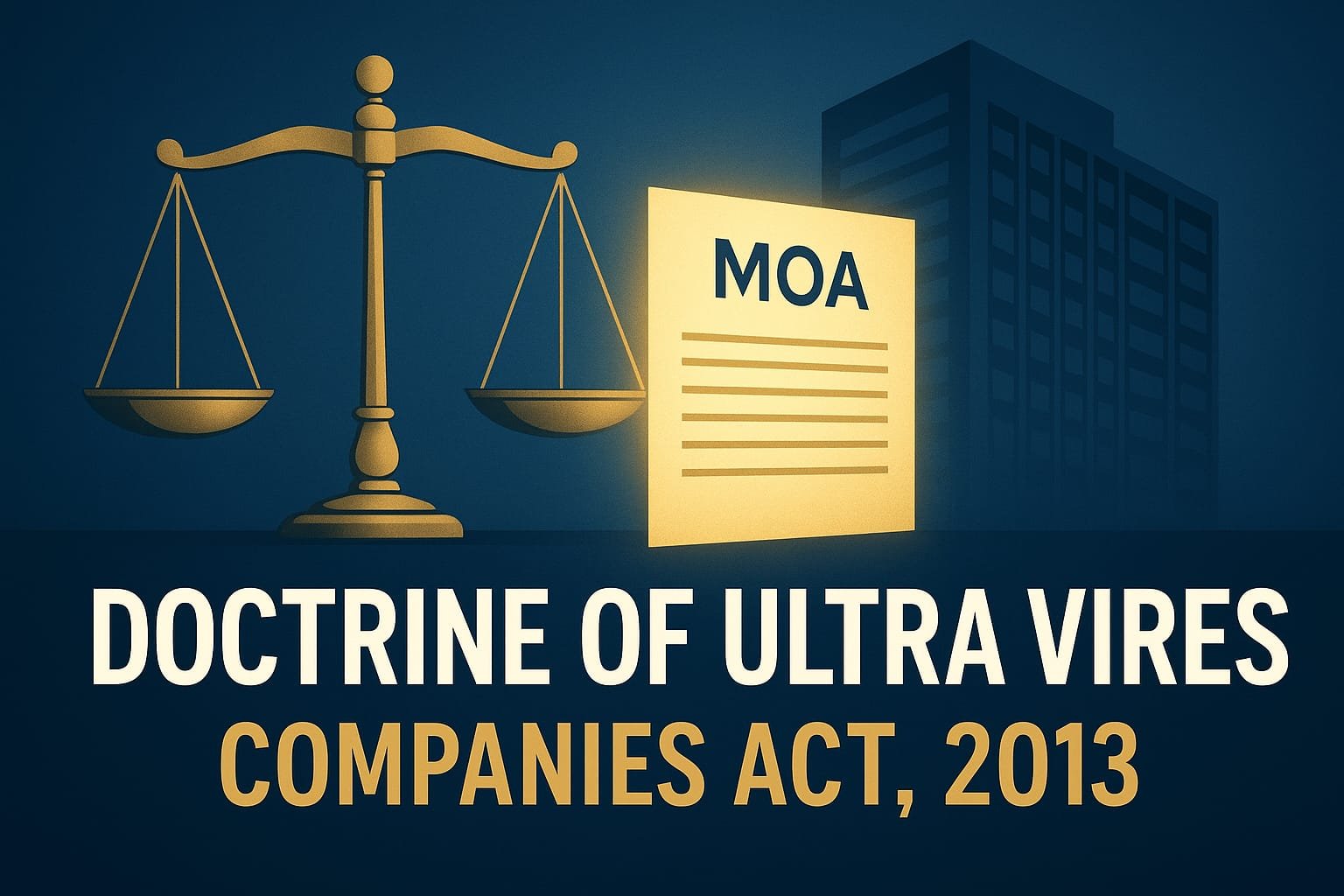
Let us begin with the Doctrine of Ultra Vires — the corporate version of “that was definitely not in the job description.” The term ultra vires means “beyond powers.” Under the Companies Act, 2013, a company derives its powers from its Memorandum of Association (MOA), particularly the Object Clause. This means the company can only perform activities that fall within the objectives mentioned in the MOA. If the company goes beyond those powers, the act becomes ultra vires and therefore void. Think of it this way: if a company was formed to manufacture books, it cannot suddenly decide one morning to start operating underwater casinos or launch a private army simply because the directors had “vision.” The law essentially says:
“Sir, stay focused on the objects you promised investors.”
The classic case on this doctrine is Ashbury Railway Carriage and Iron Co. Ltd. v. Riche. In this case, the company entered into a contract that went beyond the objects mentioned in its Memorandum. The court held the contract void because the company lacked the legal capacity to enter into it. This doctrine protects shareholders and creditors because they invest money relying upon the company’s stated objectives. Imagine investing in a company believing it manufactures laptops, only to discover later that management invested everything into competitive llama racing. The doctrine of ultra vires exists precisely to stop that level of corporate experimentation.
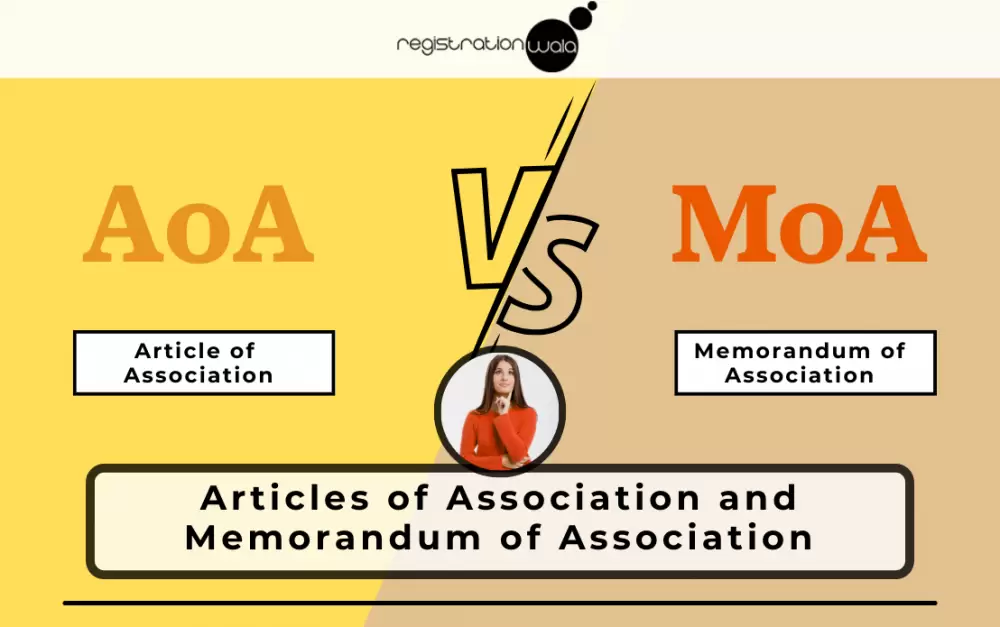
Now comes the Doctrine of Constructive Notice, which sounds like something a professor says right before giving surprise homework. Under company law, the Memorandum and Articles of Association are public documents available for inspection. Since they are publicly accessible, outsiders dealing with the company are presumed to know their contents. This legal assumption is called constructive notice. In other words, the law says:
“If you are entering into a contract with a company, you are expected to have read its public documents.”
Which is honestly hilarious because most people do not even read terms and conditions before clicking “I Agree.” Yet Company Law confidently assumes businessmen are sitting at night reading Memorandums for entertainment. Suppose the Articles of Association state that only the Managing Director can sign contracts above ₹10 lakh, but an outsider enters into such a contract with an unauthorized employee. Later, the company refuses liability. The outsider cannot argue:
“I didn’t know.”
The law responds:
“That sounds like a you problem.”
However, lawmakers eventually realized that expecting outsiders to know every internal detail of a company is slightly unreasonable. Because companies themselves often do not know what is happening internally. This led to the development of the Doctrine of Indoor Management, also known as the Turquand Rule, established in Royal British Bank v. Turquand. This doctrine acts as an exception to constructive notice and protects outsiders dealing with the company in good faith. It states that outsiders are entitled to assume that the company’s internal procedures have been properly followed.
This doctrine is basically the legal system saying:
“Look, outsiders cannot be expected to investigate every board meeting like corporate detectives.”
For example, suppose the Articles state that directors may borrow money if approved by a shareholder resolution. A bank lends money to the company believing such approval was properly obtained. Later, the company argues:
“Actually, we forgot to pass the resolution.”
The bank is protected because it was entitled to assume that internal formalities were properly completed. Otherwise every business transaction would require:
- Three lawyers
- Seven auditors
- A private investigator
- And probably CCTV footage of the board meeting
The doctrine of indoor management therefore protects commercial convenience and business efficiency. Without it, nobody would confidently deal with companies because every contract would come with fear, confusion, and twenty-seven compliance doubts. However, this protection is not unlimited. The doctrine does not apply in cases involving:
- Fraud
- Forgery
- Suspicion of irregularity
- Knowledge of internal defects
For instance, if a person knowingly deals with a forged company document, they cannot later hide behind indoor management. The law protects good faith, not creative participation in chaos.
These three doctrines together create a beautiful balance in Company Law. The doctrine of ultra vires limits corporate power. Constructive notice protects the company against careless outsiders. Indoor management protects innocent outsiders against internal corporate irregularities. Together, they ensure that companies cannot misuse power, outsiders cannot remain completely ignorant, and businesses can still function without every transaction turning into a criminal investigation documentary.
For CLAT PG aspirants, these doctrines are extremely important because they are concept-based, easy to apply in problem questions, and repeatedly asked in examinations. Examiners love factual scenarios involving unauthorized acts, defective approvals, and confused directors because these doctrines perfectly test legal reasoning. Once you understand the underlying logic, the topic becomes far less frightening. In reality, Company Law is often just organized common sense wrapped in Latin terminology to make students panic unnecessarily.
At its core, these doctrines remind us of one important truth:
Companies may be artificial legal persons, but the humans running them are still wonderfully capable of confusion, mistakes, overconfidence, and occasionally spectacular bad decisions.