Imagine getting your first salary and feeling rich for exactly five minutes… until Income Tax arrives like an uninvited guest at an Indian wedding. 💸
And just when you recover from that emotional damage, you order a pizza and GST quietly takes more money from you. Congratulations. You have officially met both Direct and Indirect Taxes.
So what exactly is the difference?
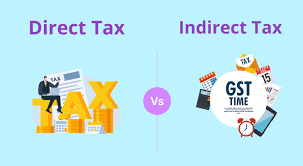
Direct Tax is the tax you pay directly to the government. No middleman. No hiding. If you earn money, you pay tax. Simple… and slightly painful.
Examples of Direct Tax include:
- Income Tax
- Corporate Tax
Indirect Tax, on the other hand, is sneaky. You pay it while buying goods or services. Technically, the seller collects it from you and gives it to the government.
The biggest example? GST.
So when you buy:
- Clothes 👕
- Food 🍔
- Gadgets 📱
You are already paying Indirect Tax.
The easiest way to understand this is through one concept:
Can the burden of tax be shifted?
If the answer is NO → it is a Direct Tax.
If the answer is YES → it is an Indirect Tax.
For example, you cannot tell the government:
“Please ask my neighbor to pay my Income Tax.”
Nice try. Doesn’t work.
But in GST, the seller shifts the burden to the consumer through the price of the product. That’s why it is called an Indirect Tax.
Here’s a quick example.
You earn ₹10 lakh a year. The tax you pay on that income is Direct Tax.
Now you celebrate your salary by ordering burgers, coffee, and shopping online. The GST included in those bills? That’s Indirect Tax.
So basically:
- Earning money gets taxed 😭
- Spending money also gets taxed 😭
Tax Law really said:
“Nobody escapes.”
Most CLAT PG aspirants get confused because they try to memorize definitions instead of understanding the logic behind them.
But CLAT PG is not testing your ability to mug up lines from textbooks. It tests whether you understand concepts clearly.
That’s why this topic is important.
Once you understand Direct vs Indirect Tax, half of Tax Law starts feeling less scary and more logical.
Whenever you see a tax-related question, ask yourself:
“Who is actually bearing the burden of the tax?”
That one question can solve many MCQs instantly.
In the end, Direct and Indirect Taxes are simply two different ways through which the government collects revenue.
One taxes what you earn.
The other taxes what you spend.
And somehow… both always find you. 💀