There are few feelings more satisfying than buying something cheaply and later selling it for a huge profit.
You feel smart.
Powerful.
Financially evolved.
For about five minutes.
Because suddenly the Income-tax Act, 1961 appears from the shadows and says:
“Congratulations on your gain. We’ll take our share.” 💀
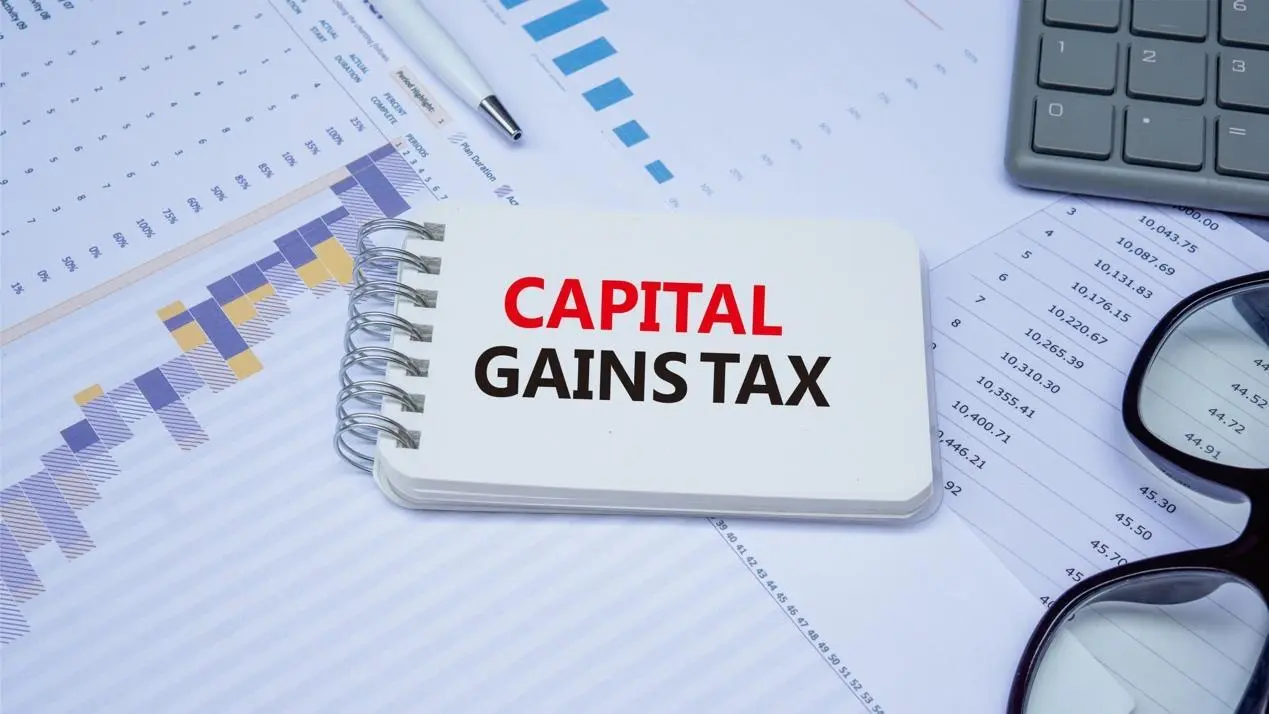
And that, dear law students, is called Capital Gains Tax.
At first glance, the topic sounds terrifying because the moment students hear terms like:
- Short-Term Capital Gain
- Long-Term Capital Gain
- Indexation
- Transfer of capital asset
their brains immediately file for emotional bankruptcy. 😭
But relax.
The core concept is actually very simple.
If you:
- Buy an asset
- Sell it later
- Earn profit from the sale
that profit may become taxable as Capital Gain.
That’s it.
Tax Law just uses dramatic language to make it sound like a finance thriller.
📚 What is a Capital Asset?
Before understanding Capital Gains, we first need to understand:
👉 What exactly is a “capital asset”?
A capital asset generally means property of any kind held by a person.
Examples include:
- Land 🏠
- Buildings 🏢
- Shares 📈
- Gold 💍
- Investments 💰
Basically:
If it has value and can be sold for profit, Tax Law is probably interested in it. 😭
However, certain personal items may not always qualify as capital assets.
So no, selling your old college notes for ₹200 probably will not trigger a national tax investigation.
Probably.
⚖️ What is Capital Gain?
Capital Gain arises when a capital asset is transferred for a price higher than its purchase cost.
In simple words:
Profit from selling assets = Capital Gain.
Example:
Rahul buys land for ₹10 lakh.
A few years later, he sells it for ₹18 lakh.
Result?
👉 ₹8 lakh profit.
Tax Law immediately says:
“Beautiful. Now let’s discuss taxation.” 💀
⏳ Short-Term vs Long-Term Capital Gains
Now comes the famous distinction that confuses almost every student initially.
Capital gains are classified based on:
👉 How long the asset was held before sale.
Meaning:
The government wants to know whether your investment was:
- A quick flip
or - A long-term hold.
Honestly, even Tax Law respects patience.
🔹 Short-Term Capital Gain (STCG)
If the asset is sold within a shorter holding period, the gain becomes:
👉 Short-Term Capital Gain.
The holding period depends on the type of asset.
For example:
- Shares may have different periods
- Property may have different periods
But the core idea remains:
Sold quickly = Short-Term.
Tax Law basically says:
“That was fast.” 😭
🔹 Long-Term Capital Gain (LTCG)
If the asset is held for a longer duration before sale, the gain becomes:
👉 Long-Term Capital Gain.
This category often receives more favorable tax treatment.
Because the government generally wants to encourage long-term investment.
Meaning:
Patience may not cure emotional damage… but it can sometimes reduce taxes. 😭
🏠 Example to Understand STCG vs LTCG
Suppose Priya buys shares and sells them after 4 months.
Result?
👉 Short-Term Capital Gain.
Now suppose she holds another investment for several years before selling.
Result?
👉 Long-Term Capital Gain.
Simple concept:
- Quick sale → STCG
- Long holding → LTCG
That’s the foundation.
📈 Why Capital Gains Tax Exists
The government taxes:
- Salary income
- Business income
- Rental income
So naturally it also taxes profits earned from investments and asset appreciation.
Otherwise people would simply shift wealth into assets and avoid regular taxation.
The law basically says:
“Profit is profit. Nice try.” 😌
🤯 What Makes This Topic Scary for Students
Three things:
- Holding periods
- Multiple asset categories
- Calculation terminology
At some point students start hearing:
- Cost of acquisition
- Full value consideration
- Indexation
and suddenly reconsider all life choices. 😭
But for CLAT PG, you usually need:
- Conceptual understanding
- Basic classification
- Core principles
You are not expected to become an investment banker overnight.
Relax.
🧾 What is Indexation? (The Word Students Fear)
Indexation sounds horrifying but the idea is simple.
It adjusts the purchase cost of an asset for inflation.
Because:
₹1 lakh twenty years ago ≠ ₹1 lakh today.
The government acknowledges inflation while calculating certain long-term gains.
Which is honestly one of the rare moments Tax Law behaves reasonably. 😭
💀 Capital Gains and Human Psychology
One of the funniest things about Capital Gains Tax is how people react emotionally.
When investments increase:
“I am a financial genius.”
When taxes apply:
“This system is unfair.” 😭
Tax Law remains completely unbothered by both emotions.
🔥 CLAT PG TIP
Whenever solving Capital Gains questions, ask:
- Is there a capital asset?
- Was there a transfer?
- Was profit earned?
- Was the holding period short-term or long-term?
This flow simplifies most problems instantly.
📌 Quick Revision
Capital Gain:
Profit earned from transfer of a capital asset.
Types:
- Short-Term Capital Gain (STCG)
- Long-Term Capital Gain (LTCG)
Common Capital Assets:
- Property
- Shares
- Gold
- Investments
Important Idea:
Holding period determines classification.
🚀 Final Thoughts
Capital Gains Tax is one of the most practical and real-world concepts in Tax Law because it connects directly with:
- Investments
- Property
- Wealth creation
- Financial planning
At first, the terminology may look complicated.
But underneath all the legal language, the principle is very straightforward:
If you make profit by selling valuable assets, the government would also like to participate in your happiness. 😭⚖️