There are very few things in life that unite all Indians equally. Cricket. Complaining about traffic. And accidentally paying GST on literally everything. 😭
You order food? GST.
You buy clothes? GST.
You book a hotel? GST.
At this point, if someone sells oxygen in fancy packaging, there’s probably GST on that too.
And yet, despite seeing the term everywhere, most law students still secretly wonder:
“What exactly is GST, and why does it follow me everywhere?”
So let’s finally decode it without making it sound like a CA coaching class at 7 AM.
GST stands for Goods and Services Tax. It is an indirect tax introduced in India on 1st July 2017. The idea behind GST was actually very simple:
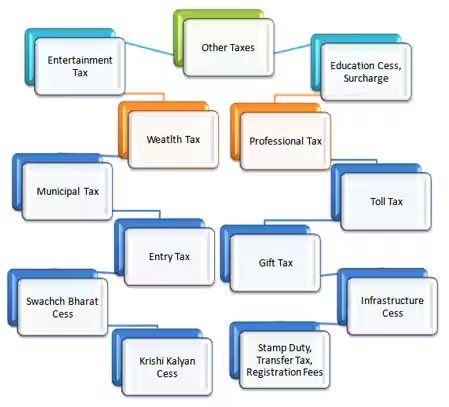
Before GST, India had too many indirect taxes.
There was:
- VAT
- Service Tax
- Excise Duty
- Entry Tax
- Luxury Tax
- Entertainment Tax
Basically, the tax system looked like a group project where everyone added their own slide without coordination.
Businesses were confused. Consumers were confused. Even confusion itself was confused.
Then the government said:
“Enough. Let’s combine these taxes into one major system.”
And thus, GST was born.
This is why GST is often called:
“One Nation, One Tax.”
Now before you imagine GST as some heroic superhero flying over the Indian economy, relax. It still has its complications. A lot of them. But the intention behind it was simplification.
The most important thing to remember is this:
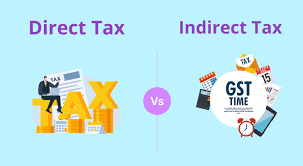
GST is an Indirect Tax.
This means the burden of tax can be shifted from one person to another.
For example, when you buy a pizza worth ₹500, the restaurant collects GST from you and later deposits it with the government.
So technically:
- The business collects the tax
- But you ultimately pay it
In other words:
GST is like that friend who says “I’ll pay first, you transfer later.” 😭
Now here comes the interesting part.
GST is divided into different types, and this is where students suddenly start feeling like they entered a multiplayer video game.
There are mainly three important types:
🔹 CGST – Central Goods and Services Tax
This portion goes to the Central Government.
🔹 SGST – State Goods and Services Tax
This portion goes to the State Government.
🔹 IGST – Integrated Goods and Services Tax
This applies when goods or services move from one state to another.
Yes, GST really said:
“Federalism but make it complicated.” 💀
Let’s understand this with an example because Tax Law without examples feels like punishment.
Suppose you buy shoes in Delhi.
The GST charged on those shoes gets divided into:
- CGST
- SGST
Now suppose the shoes are sold from Delhi to Maharashtra.
That transaction involves IGST because it is an interstate supply.
Simple logic:
- Same state → CGST + SGST
- Different states → IGST
That’s the core idea.
Not scary. Just badly explained in most classrooms.
One of the biggest reasons GST was introduced was to remove something called the “cascading effect of taxes.”
This sounds extremely technical, but the concept is actually simple.
Before GST, tax was charged on tax repeatedly.
Imagine paying tax on a product… and then paying another tax on the already taxed amount.
Basically:
Taxes were reproducing faster than exam stress. 😭
GST tried to solve this through something called Input Tax Credit (ITC).
Under ITC, businesses can claim credit for taxes already paid on inputs.
This prevents double taxation and makes the system more efficient.
And yes, this is one of the favorite concepts examiners love asking.
Now let’s address the emotional reality of every law student.
When students first study GST, they often react like this:
Day 1:
“Okay this is manageable.”
Day 3:
“Why are there so many sections?”
Day 5:
“Maybe I should start a bakery instead.” 😭
But the truth is, GST becomes easy once you stop trying to memorize everything and start understanding the flow.
GST mainly revolves around:
- Supply
- Registration
- Input Tax Credit
- Levy and collection
- Returns and compliance
If these concepts are clear, you are already ahead of most aspirants.
For CLAT PG, you do not need to become a tax consultant overnight.
You simply need:
- Conceptual clarity
- Understanding of the framework
- Important legal principles
That’s it.
The exam is testing whether you understand the system—not whether you can emotionally survive filing tax returns.
🔥 CLAT PG TIP
Whenever you study GST, ask yourself three questions:
- Is there a supply?
- Is GST applicable?
- Which type of GST applies?
This approach simplifies most problems instantly.
In the end, GST is not just a tax reform.
It completely changed India’s indirect taxation structure and became one of the biggest economic reforms in recent history.
And while students often fear Tax Law, GST is actually one of the most logical areas once you understand the basics.
So the next time you see GST on a restaurant bill, don’t just feel pain.
Feel legal awareness. ⚖️😭